Here’s the uncomfortable truth about Christmas music on YouTube: the copyright landscape is an absolute minefield, and it’s especially treacherous during the holidays. But once you understand how the system actually works—and I mean really works, not just the oversimplified version everyone repeats—you can create holiday content confidently without losing sleep over strikes or stolen ad revenue.
Why Christmas Music is Uniquely Dangerous for Content Creators
Let me explain something that catches out even experienced YouTubers: there’s a massive difference between a song’s composition being public domain and a specific recording being freely usable. “Jingle Bells” as a melody? Public domain since 1857. That specific Michael Bublé recording of “Jingle Bells”? Absolutely copyrighted, and Content ID will flag it in milliseconds.
Here’s where it gets properly frustrating: even if you perform “Silent Night” yourself with no backing track, you can still receive copyright claims. YouTube’s Content ID system recognises melodies, not just recordings. I’ve seen family videos of children singing carols a cappella get flagged by music publishers. A family uploaded footage of their children singing “Jingle Bells”—no instruments, just pure childhood joy—and received an immediate copyright claim from a major record label.
Why? Because whilst the song itself might be public domain, that jazzy Frank Sinatra arrangement from 1957 is still wrapped up tighter than presents under the tree. YouTube’s Content ID system cannot distinguish between your nephew’s warbling and Ol’ Blue Eyes’ crooning.
The timing makes everything worse. Christmas content has perhaps a six-week window of peak relevance. Get hit with a copyright dispute in early December, and your video’s effectively dead before Christmas morning. There’s no second chance until next year. Three strikes and you’re out—permanently. Not just for Christmas, but forever. Your entire channel vanishes like snowflakes on a warm tongue.
Even more maddening: accidentally capturing three seconds of “All I Want for Christmas Is You” playing in a shop whilst filming your holiday haul? That’s enough to trigger the copyright bells. One creator reported losing £2,000 in December revenue because Mariah Carey’s voice drifted into their crafting tutorial from a neighbour’s flat.
The Platform Fragmentation Nightmare Nobody Talks About
Right, here’s another absolute headache that blindsided me when I started working with multi-platform creators: music that’s perfectly legal on TikTok is completely off-limits on YouTube. And vice versa.
TikTok pays licensing fees so you can use snippets from their commercial music library—brilliant, yeah? Except those licences only apply within TikTok. The moment you try to post that same video to YouTube Shorts, Instagram Reels, or your website, you’re in violation of copyright. I’ve watched creators pour hours into a perfect holiday video using TikTok sounds, only to discover they need to completely re-edit for every other platform.
Critical reminder: Using music outside each platform’s licensed library is like playing Russian roulette with a candy cane. Instant removal, no appeals, no Christmas miracle.
For anyone trying to build an audience across multiple channels (which is basically everyone in 2025), this platform fragmentation is a productivity killer. You’re essentially creating three different versions of the same content, each with different music, different edits, and different headaches.
What “Royalty-Free” Actually Means (And Why It’s Confusing)
Let’s clear up some terminology that trips up even seasoned creators. When you see “royalty-free Christmas music,” it absolutely does not mean “free.” Mind-bending, I know.
Royalty-free means you pay once upfront instead of ongoing royalties for each use. You still pay—sometimes £20, sometimes £200 per track. Copyright-free technically means public domain, but this term gets misused constantly. And “No Copyright Music” on YouTube? Often still requires attribution and restricts commercial use, despite the name.
The consequences of misunderstanding these distinctions aren’t trivial. Copyright infringement carries statutory damages starting at £600 minimum and potentially reaching £120,000 for wilful violations. Even without lawsuits, three copyright strikes means YouTube terminates your channel. That’s years of work vanished.
I’ve spent over a decade in electronic composition, and I can tell you the music industry hasn’t made this easy to understand. Whether that’s intentional or just bureaucratic inertia, I couldn’t say. But what I can do is give you a straightforward solution that sidesteps this entire minefield.
The Attribution Anxiety Problem
Even when creators find properly licenced music, they often panic about attribution. Am I crediting this correctly? Must it be in the video itself or just the description? What about TikTok where there’s barely any description field?
I’ve seen creators get copyright strikes specifically because their attribution wasn’t detailed enough. They listed the song title but not the artist. Or they mentioned the artist but didn’t link to the licence. Or they put everything at the end of the video where 90% of viewers had already dropped off, so the rights-holder claimed the attribution wasn’t “visible.”
According to some licensing experts, roughly 80% of copyright strikes on Creative Commons music stem from improper attribution rather than actual licence violations. That’s genuinely wild when you think about it.
YouTube Videos: Finding Your Festive Frequency
Let’s unwrap the gift of knowledge for YouTube creators first, shall we?
The sweet spot for Christmas background music sits between -25 to -30dB when paired with voiceover—think of it as the audio equivalent of fairy lights: present enough to create atmosphere, subtle enough not to blind anyone. Music alone can dance around -18 to -22dB, like a confident elf at the Christmas party.
Duck your dialogue. When someone’s speaking, your Christmas music should drop to around -20dB to -25dB. Nothing’s more annoying than fighting to hear dialogue over jingle bells. Most editing software (Premiere Pro, Final Cut, DaVinci Resolve, even CapCut) has auto-ducking features now.
Here’s what actually works: Contemporary instrumental versions of classics perform brilliantly. They trigger that nostalgic dopamine hit without competing with your narration or risking the wrath of copyright holders. Videos with well-chosen holiday music see 14% more views and 12% more likes—that’s the difference between a successful December and buying your own presents.
Match the energy to your content. If you’re doing a calm, cosy holiday baking video, don’t use high-energy orchestral pieces. Conversely, upbeat holiday shopping hauls need momentum, not gentle acoustic guitar. This seems obvious, but I constantly see energy mismatches that tank viewer retention.
Consider music-free intros. For the first 3-5 seconds, let your hook breathe without music. Once viewers are engaged, bring in the holiday vibes. This prevents the “sensory overload” effect where viewers immediately click away.
Create seamless loops for longer content. If you’re doing a 10-minute video, don’t just loop a 2-minute track five times with jarring cuts. Either use longer compositions or learn to create smooth crossfades between tracks. Your audience notices those abrupt restarts, even subconsciously.
The trending approach for 2025? Use festive music for your intro and outro whilst maintaining your signature style throughout. It’s like wearing a Christmas jumper to a party—festive enough to join in, still recognisably you.
Common pitfalls to dodge like mistletoe at an office party:
- Using Spotify or Apple Music tracks (illegal for monetised content, even with a premium subscription)
- Choosing the same overplayed songs as everyone else (viewer fatigue is real)
- Cranking the volume until your audience needs subtitles
Podcasts: The Impossible Situation Nobody Talks About
Podcasters, I need you to sit down with a strong cup of mulled wine for this bit.
Your ASCAP/BMI/SESAC licences? They’re about as useful for podcasting as a chocolate teapot. These cover public performance, not reproduction or distribution. You’d need mechanical licences, distribution licences, sync licences, AND master use licences. It’s like needing four different types of wrapping paper for one present—exhausting and expensive.
The elegant solution: instrumental holiday music in your intro and outro segments, keeping it to -28 to -32dB under your voice. Think of it as the audio equivalent of subtle tinsel—enough to signal the season without overwhelming the conversation.
Duration matters too. Holiday podcast episodes typically run from snappy 3-minute daily updates to cosy 60-minute deep dives. The most successful format? Weekly episodes throughout December, like an audio advent calendar your listeners actually want to open.
Social Media: Where Trends Move Faster Than Rudolph
Instagram Reels and TikTok have transformed Christmas content into a high-speed sleigh race where timing is everything.
The current champions of festive social media:
- Mariah Carey’s eternal anthem (still undefeated)
- Sabrina Carpenter’s “A Nonsense Christmas” (cheeky and modern)
- Lo-fi Christmas beats (the dark horse winner of 2024)
Platform particulars that matter:
- Instagram Reels: 30-90 seconds of festive glory
- TikTok: 15-60 seconds of pure holiday chaos
- Volume mixing: Can be more prominent than YouTube—music at -20 to -25dB under voice
The secret sauce? Jump on trending audio within 48 hours of it exploding. Christmas trends move faster than children running toward presents. Miss the window, and you’re yesterday’s fruit cake.
Corporate Presentations: Sophisticated Seasonal Soundscapes
For those creating content for the boardroom rather than the living room, Christmas music requires the finesse of a perfectly mixed cocktail at the company party.
Instrumental jazz and classical arrangements reign supreme here—think less “Grandma Got Run Over by a Reindeer,” more “sophisticated winter soirée.” Piano-led pieces at 60-90 BPM create that professional atmosphere whilst acknowledging the season.
The data is delicious: 42% of people spend more time engaging with content featuring appropriate holiday music. In corporate settings, this translates to actual attention during those end-of-year presentations.
The cardinal sin: Using consumer Spotify at corporate events. It’s illegal, risks hefty fines, and screams “we didn’t plan this properly” louder than an untested microphone.
Documentaries: Truth, Tinsel, and Subtlety
Documentary creators, your approach to Christmas music should be like a good brandy butter—rich when needed, never overwhelming the main dish.
Music in documentaries typically occupies only 43 minutes of a 90-minute film. During holiday segments, aim for -22 to -30dB under dialogue. The goal? Enhancement, not manipulation. Your audience should feel the seasonal atmosphere without questioning your editorial integrity.
Consider diegetic music (naturally occurring in the scene) over added soundtrack. The Christmas carollers on the street corner, the shop’s background muzak, the family’s wonky piano rendition—these authentic sounds often tell better stories than any polished track.
Matching Music to Mood: Your Festive Formula
Think of Christmas music selection like choosing the perfect gift—it’s all about understanding the recipient (your audience) and the occasion (your content type).
For maximum holiday happiness (product launches, party invitations):
- Tempo: 120-150 BPM (think excited child energy)
- Major keys with bells and brass
- Modern pop arrangements that sparkle
For cosy, contemplative content (year-end reflections, family stories):
- Tempo: 60-90 BPM (warm fireplace vibes)
- Soft piano, strings, acoustic guitar
- Gentle dynamics that wrap around viewers like a comfortable blanket
For contemporary cool (fashion, tech, lifestyle):
- Electronic elements mixed with traditional instruments
- Hip-hop and R&B influenced arrangements
- That perfect balance of festive and fresh
The Modern Christmas Sound (And Why It Matters for Standing Out)
Here’s something I’ve noticed over the past decade: audiences are exhausted by the same 15 Christmas songs on repeat. They’ve heard Mariah Carey in every shop since November. They’re drowning in jingle bells.
The creators who stand out use modern production techniques: lo-fi Christmas beats, cinematic orchestral arrangements, acoustic indie vibes, even synthwave holiday music. These styles feel fresh while still capturing holiday spirit. They signal to your audience: “This creator put thought into their production.”
Studies show 52% of audiences want a mix of traditional and contemporary Christmas music. Pure classics cause fatigue faster than assembling flat-pack furniture on Christmas Eve. Pure modern leaves older audiences cold. The magic lives in the mix.
I specifically composed the Silverman Sound holiday collection with this in mind. You’ll find traditional warmth when you need it, but also contemporary production styles that help your content feel current rather than recycled.
The Psychology Behind the Jingle Bells
Here’s the fascinating bit: Christmas music literally rewires your audience’s brain. It activates the medial prefrontal cortex, unleashing a flood of autobiographical memories more powerful than Proust’s madeleines.
The “reminiscence bump” means music from ages 15-30 creates the strongest memories. This is why forty-somethings go weak at the knees for Wham! whilst Gen Z gravitates toward Ariana Grande’s holiday offerings.
When to Start (And Stop) Using Christmas Music
Quick strategic note on timing: I start seeing smart creators use holiday music as early as September for “Christmas in July 2.0” and holiday planning content. The extended holiday season now runs September through January, not just December.
But here’s the trick—match your music intensity to the calendar. September and October call for subtle, anticipatory holiday touches. November ramps up the energy. December goes full festive. January shifts to “fresh start” vibes while acknowledging the season just passed.
Using intense Christmas music in September feels desperate. Using it in January feels dated. Read the room (or rather, the calendar).
Testing Your Festive Audio (Before It Goes Live)
Before you publish, test like your revenue depends on it (because it does).
Create three versions:
- Version A: Your chosen Christmas music
- Version B: Alternative style
- Version C: No music (baseline)
Ask five trusted viewers:
- Could you understand every word?
- Did the music enhance or distract?
- What emotion did you feel?
Red flags requiring immediate attention:
- Dialogue becomes unintelligible
- Music triggers unintended emotions (nobody wants tears during an unboxing video)
- Your test audience starts humming competing songs
Here’s What Actually Works (And What I Use Myself)
After helping thousands of creators navigate this mess, here’s my honest recommendation for holiday content in 2025:
Use music specifically designed for creators with crystal-clear licencing. Not “probably okay” music. Not “I think this is public domain” music. Music where the licensing terms are explicit, simple, and designed for the exact use case you need—YouTube videos, Instagram reels, TikTok, podcasts, commercial work, all of it.
I created the royalty-free Christmas music collection at Silverman Sound specifically to solve these problems. Every track uses Creative Commons CC BY 4.0 licensing, which means:
- You can use it commercially (monetised YouTube videos, client work, everything)
- You can use it across every platform—YouTube, TikTok, Instagram, your website, podcasts, anywhere
- You can edit, remix, or adapt the music to fit your content
- You never lose access, even years later
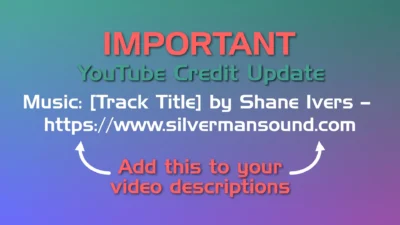
- The only requirement is attribution, which is straightforward: just credit “Silverman Sound” in your video description with a link back
No subscriptions that you have to maintain forever or lose access to your old videos. No per-project licensing fees that add up. No platform restrictions. No Content ID nightmares (I don’t register these tracks in Content ID specifically to avoid false claims against legitimate users).
Your Christmas Music Survival Kit
Ready to create festive content without the copyright nightmare? Here’s your practical checklist:
- Choose properly licensed music (this is where Silverman Sound’s royalty-free holiday collection becomes your best friend—no strikes, no claims, just festive excellence)
- Match tempo to intention: Upbeat for energy (120-150 BPM), medium for versatility (90-120 BPM), slow for reflection (60-90 BPM)
- Mind your levels: Background music should whisper, not shout
- Test before you invest: Small audience feedback prevents large audience disasters
- Document everything: Keep those licence receipts safer than Santa’s list
The Bottom Line for Creators in 2025
The Christmas music copyright landscape isn’t getting simpler. With AI detection systems, platform fragmentation, and increasingly aggressive Content ID matching, creators need bulletproof solutions.
You’ve got two choices: spend hours researching copyright law, tracking licensing restrictions across platforms, disputing false claims, and hoping you don’t make an expensive mistake. Or use music specifically created for creators, with licensing so clear a five-year-old could understand it.
I built Silverman Sound’s holiday music collection because I was tired of watching brilliant creators get punished for trying to add festive music to their hard work. You shouldn’t need a law degree to make a Christmas video.
Creating brilliant holiday content shouldn’t feel like walking through a copyright blizzard in your socks. With the right music choices, your Christmas videos can capture hearts, spread joy, and—crucially—keep earning revenue long after the decorations come down.
Remember: that 42% increase in engagement and 14% more views await those who choose wisely. That’s not just statistics; that’s the difference between holiday success and digital coal.
Browse the collection, find tracks that match your content’s energy, download them, and create with confidence. That’s how holiday content creation should work.
And if your holiday video goes viral and gets picked up by the news, or lands a brand sponsorship, or turns into something bigger than you imagined? The licence covers all of that. No surprise fees, no panicked emails to rights-holders, no problems. Just pure creative freedom.
Now stop reading and go make something brilliant. The holiday season waits for no one.



One Response
It’s very helpful